Home Blogs Photodynamic Therapy for Cancer

Photodynamic Therapy for Cancer

Photodynamic Therapy for Cancer

Photodynamic therapy is not a new idea. Its origins date back more than a century, and it became the first drug-device combination to receive FDA approval for cancer treatment in the 1990s. What has changed in recent years is the precision with which it can be delivered, the range of cancers for which it is used, and the growing body of clinical evidence supporting its role, particularly for patients who have not responded adequately to conventional treatment, or who cannot tolerate the side effects that chemotherapy and radiotherapy bring.

PDT does not work for every cancer type, and it is not a substitute for surgery or systemic therapy in all situations. But for specific cancer presentations, and for patients seeking a targeted, minimally invasive option that preserves healthy tissue and does not carry the systemic toxicity of chemotherapy, it represents a genuinely meaningful addition to the treatment landscape.

At GS Medical Services in Dubai, we coordinate access to photodynamic therapy for cancer patients through specialist clinics in Germany. We manage every aspect of the referral, coordination, logistics, and follow-up process, so that patients from the UAE, the Gulf region, and internationally can access this treatment with proper clinical oversight and support.

Understanding Photodynamic Therapy and How It Works?

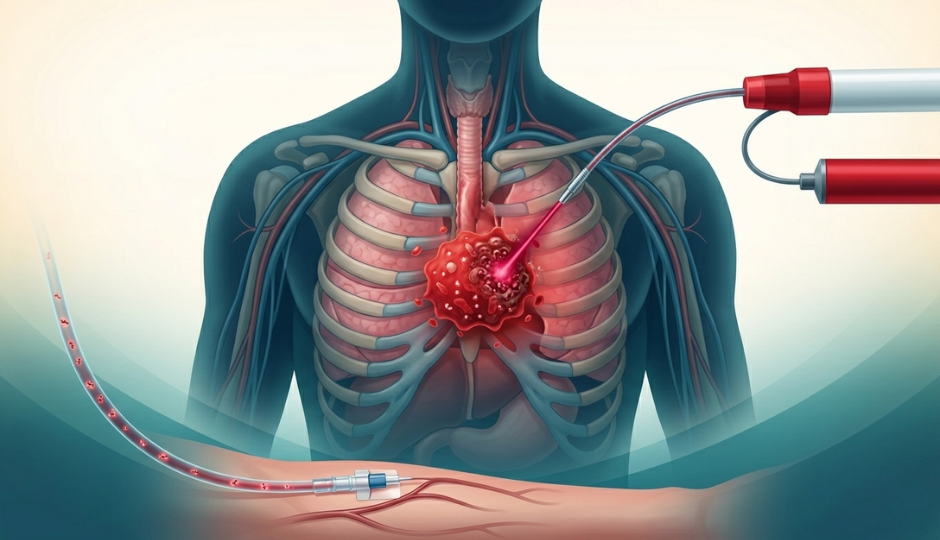
Photodynamic therapy is built around three components working together: a photosensitising agent (photosensitiser), light of a specific wavelength, and oxygen in the target tissue. None of these three elements alone causes the therapeutic effect; it is their combination that produces the anti-cancer action.

The process works as follows. A photosensitiser is administered, typically intravenously or, in some applications, topically, and allowed to accumulate preferentially in tumour tissue. Photosensitisers have a natural affinity for cancer cells and accumulate at significantly higher concentrations within them compared to surrounding healthy tissue. After a defined interval, the treatment site is exposed to light of the correct wavelength to activate the photosensitiser. Upon activation, the photosensitiser reacts with tissue oxygen to produce reactive oxygen species in particular, singlet oxygen, which are directly toxic to tumour cells.

The biological effects extend beyond the direct killing of cancer cells. PDT also damages the blood vessels that supply the tumour, cutting off its oxygen and nutrient supply and accelerating tumour death. Additionally, a body of clinical and preclinical evidence has documented that PDT can stimulate a local immune response against the tumour, potentially contributing to longer-term tumour control.

A 2024 review published in MedComm described PDT as "a temporally and spatially precisely controllable, noninvasive, and potentially highly efficient method of phototherapy", a characterisation that reflects both the approach's strengths and the precision with which it can be applied at the tumour site.
What Cancers Can Photodynamic Therapy Treat?

PDT has been clinically studied and applied across a range of cancer types. Its primary strength lies in treating localised disease tumours that are accessible to light delivery, and it is particularly well established in the following areas:

  • Oesophageal cancer: PDT with porfimer sodium (Photofrin) was among the earliest approved applications, used to treat tumours that obstruct the oesophagus and for cases where other interventions are unsuitable. It is also approved for high-grade dysplasia in Barrett's oesophagus, a premalignant condition.
  • Lung cancer: PDT is used for early-stage non-small cell lung cancer in patients where surgery and radiotherapy are not indicated, and for palliation of endobronchial obstruction in more advanced cases.
  • Skin cancers and precancers: PDT is an established treatment for non-melanoma skin cancers, including superficial basal cell carcinoma and squamous cell carcinoma in situ (Bowen's disease), as well as actinic keratosis. Its ability to treat these conditions without scarring makes it particularly valuable for cosmetically sensitive areas.
  • Head and neck cancers: PDT has demonstrated effectiveness as an adjuvant treatment following surgery, and shows particular promise in early-stage laryngeal cancer and recurrent head and neck carcinoma.
  • Cholangiocarcinoma (bile duct cancer): A review published in Frontiers in Oncology found that PDT combined with biliary stenting improves overall survival compared to stenting alone in patients with this difficult-to-treat cancer.
  • Bladder cancer: PDT has been studied for superficial bladder cancer, delivered via cystoscope, with evidence of effective tumour clearance.
  • Prostate and breast cancer: Research is ongoing, with a focus on targeted photosensitiser delivery systems to improve tumour-specific uptake.

PDT is most effective when used for accessible, localised tumours. Its limitations include light's limited ability to penetrate deep tissue, which restricts its current application to deeply seated solid tumours without specialised delivery approaches.

Standard Cancer Treatments and Where They Fall Short

These are the standard treatments for cancer. But they do have some limitations:

Treatment

Limitation

Surgery

Invasive; not suitable for all tumour locations or patient health status; risk of scarring and functional impairment

Chemotherapy

Systemic toxicity; significant side effects including hair loss, nausea, fatigue, and immunosuppression; not always effective for local tumour control

Radiotherapy

Cumulative radiation exposure; damage to surrounding healthy tissue; not repeatable indefinitely in the same area

Immunotherapy

Effective for specific tumour types; unpredictable response rates; can cause immune-related adverse events

Targeted therapy

Depends on specific molecular markers; resistance develops over time in many cases

The fundamental limitation: many standard treatments work systemically or carry significant toxicity that substantially affects quality of life. For patients with localised cancer, or those who cannot tolerate systemic treatment, a targeted local approach that spares healthy tissue has clear clinical appeal.

The Science Behind Photodynamic Therapy for Cancer

PDT destroys tumours through three distinct biological pathways that operate simultaneously:

  • Direct tumour cell killing: Reactive oxygen species, primarily singlet oxygen, generated at the tumour site cause oxidative damage to cancer cell membranes, mitochondria, and other cellular structures, triggering both apoptosis (programmed cell death) and necrosis. Because photosensitisers accumulate preferentially in tumour tissue, this damage is concentrated at the cancer site.
  • Vascular disruption: PDT damages the blood vessels supplying the tumour, leading to vascular shutdown, deprivation of oxygen and nutrients, and ischaemic tumour death. This mechanism adds a second route of destruction beyond direct cellular toxicity.
  • Immune activation: Research published in peer-reviewed journals has documented that PDT can elicit a local inflammatory response at the treated site that develops into systemic anti-tumour immunity, potentially contributing to long-term tumour growth control. This immunogenic effect is a significant area of current research interest, particularly in combination with immunotherapy approaches.

About Photosensitisers

Not all photosensitisers are equivalent. They differ in their affinity for tumour tissue, the wavelength of light that activates them, their penetration depth, and their duration of skin photosensitivity following treatment. Specialist clinics select the appropriate photosensitiser based on the tumour type, location, and individual patient factors:

  • First-generation photosensitisers: Porfimer sodium (Photofrin), the most widely studied and the first to receive FDA approval, is activated by red light and remains a clinical standard for oesophageal and lung cancer applications.
  • Second-generation photosensitisers: Agents such as 5-aminolevulinic acid (5-ALA), methyl aminolevulinate (MAL), and temoporfin offer improved tumour selectivity, shorter skin photosensitivity periods, and better pharmacokinetic profiles, and are widely used in skin cancer and head and neck applications.

Third-generation and targeted photosensitisers: Newer agents are being developed to further enhance tumour-specific delivery and reduce off-target effects, including antibody-conjugated and nanoparticle-based approaches that are currently under clinical research.

Important Consideration

Photodynamic therapy is not a universal cancer cure and does not replace surgery, chemotherapy, or radiotherapy in all contexts. Its effectiveness depends on tumour type, location, depth, stage, the photosensitiser used, and the patient's overall condition. GS Medical Services is committed to an honest assessment of what PDT may and may not offer each individual patient before any decision is made.

What to Expect During Photodynamic Therapy Treatment in Germany?

A structured PDT programme is designed specifically for international and regional patients. Every step is coordinated by a dedicated team.

Step 1: Comprehensive Medical Review and Eligibility Assessment

Your journey begins with a thorough evaluation:

  • Full review of medical history, cancer type, stage, prior treatment, and current status
  • Review of pathology, imaging, and relevant investigations
  • Assessment of tumour location and accessibility for PDT delivery
  • In-depth consultation with the specialist medical team
  • An honest assessment of whether PDT is appropriate for your specific case, including a direct answer if the evidence does not support treatment in your situation

Step 2: Personalised Treatment Planning

If assessed as a suitable candidate, a fully individualised protocol is developed:

  • Selection of the appropriate photosensitiser based on tumour type, location, and patient factors
  • Tailored light delivery approach, external, endoscopic, or interstitial, depending on tumour accessibility
  • Clear explanation of the procedure, timeline, and realistic outcome expectations
  • Transparent discussion of potential benefits, risks, and how PDT fits alongside any existing cancer treatment
  • Comprehensive logistics support, including travel arrangements and accommodation guidance for international patients

Step 3: Photodynamic Therapy Procedure

Treatment is conducted by experienced, licensed physicians in a clinical environment meeting international medical standards:

  • Photosensitiser administered by intravenous infusion or topical application, depending on the cancer type, and a waiting period of 24–72 hours allowed for preferential accumulation in tumour tissue
  • Light activation delivered via the appropriate method: surface illumination for skin lesions, laser-guided endoscopic delivery for internal tumours (oesophageal, lung, bladder), or interstitial fibre placement for accessible solid tumours
  • Performed on an outpatient or short-stay basis in most cases
  • Sterile clinical environment with full monitoring throughout
  • Physician-supervised, with immediate post-treatment observation
  • The procedure itself typically takes 1–3 hours, depending on the site and extent of treatment

Step 4: Structured Follow-Up and Progress Monitoring

Care extends well beyond the treatment procedure:

  • Remote follow-up via secure telemedicine, no need to return to Germany for routine reviews
  • Progress evaluation using appropriate imaging and clinical assessment to track tumour response
  • Guidance on sun and light avoidance during the photosensitivity period following treatment
  • Ongoing coordination with your treating oncologists at home to integrate PDT into your overall cancer management
  • Direct access to the medical team throughout, for questions or concerns as they arise

Who May Be a Suitable Candidate for Photodynamic Therapy for Cancer?

PDT is not appropriate for every patient or every cancer presentation. Those most likely to benefit typically include:

  • Localised or accessible tumours where light delivery to the tumour site is achievable
  • Early-stage cancer where PDT may be curative, or locally advanced disease where PDT offers palliation and improved quality of life
  • Patients who cannot tolerate surgery, chemotherapy, or radiotherapy due to age, comorbidities, or prior treatment burden
  • Cancer recurrence in a previously treated area where re-irradiation or repeat surgery carries a high risk
  • Non-melanoma skin cancers, actinic keratoses, and superficial lesions where cosmetic preservation is important
  • Oesophageal, lung, head and neck, or bile duct cancers in appropriate clinical presentations
  • Patients seeking a minimally invasive, organ-sparing approach as part of a broader treatment plan
  • A clear understanding that PDT is not a systemic treatment and is most effective for localised disease

PDT is generally less suitable for deeply seated solid tumours where light delivery cannot reach the full tumour volume, widely metastatic disease, or cases requiring systemic tumour control. Each patient is assessed individually.

Potential Benefits of Photodynamic Therapy for Cancer

Based on clinical evidence, approved indications, and published research, PDT for cancer may offer the following benefits. Outcomes are not guaranteed and vary by individual and tumour type.

  • Targeted tumour destruction with preservation of surrounding healthy tissue: Because photosensitisers accumulate preferentially in tumour cells and light is applied locally, damage to adjacent healthy structures is significantly limited compared to radiotherapy and chemotherapy.
  • No scarring: PDT does not cause the scarring associated with surgery, making it particularly valuable for cancers in cosmetically or functionally sensitive areas.
  • Repeatability: Unlike radiotherapy, PDT can generally be repeated if needed without the accumulating toxicity that limits repeat radiation courses.
  • Minimal systemic side effects: PDT does not carry the systemic toxicity profile of chemotherapy; there is no hair loss, bone marrow suppression, or significant nausea associated with the procedure itself.
  • Outpatient treatment in most cases: Most PDT procedures do not require hospital admission, allowing patients to return to their accommodation the same day.
  • Immune stimulation: Evidence suggests PDT may activate anti-tumour immune responses, potentially contributing to longer-term disease control beyond the immediate treatment effect.

Complementary role alongside other treatments: PDT can be integrated with surgery, chemotherapy, or immunotherapy for a combined approach, with evidence of additive benefit in specific cancer types.

Potential Side Effects of Photodynamic Therapy for Cancer

PDT has a well-documented safety profile when performed appropriately in suitable patients. Side effects are generally more localised and manageable than those of systemic cancer treatments. All risks will be discussed in full during your consultation.

Common side effects (typically mild and temporary):

  • Photosensitivity of the skin: After IV photosensitiser administration, the skin becomes sensitive to sunlight and bright indoor light for 4–6 weeks with first-generation agents and a shorter period with newer second-generation photosensitisers. Patients are advised to avoid direct sunlight during this period and provided with detailed guidance.
  • Pain, redness, or swelling at the treatment site, particularly for skin and surface applications, typically resolves within days to weeks
  • Temporary fatigue following the procedure
  • Swelling or inflammation in the treated area, which may cause temporary functional symptoms depending on the site (e.g. mild difficulty swallowing for oesophageal PDT)

Rare but serious complications:

  • Oesophageal or bronchial stricture following PDT to internal structures, risk minimised by appropriate technique and photosensitiser selection
  • Pleural effusion or fistula formation in rare cases with internal tumour treatment
  • Significant skin burns if sun exposure advice is not followed during the photosensitivity period

Every patient undergoes a thorough pre-procedure assessment before treatment begins. Post-treatment guidance, including detailed advice on light avoidance, wound care, and when to seek medical attention, is provided to all patients and their families before discharge.

Why Choose GS Medical Services for Photodynamic Therapy?

A cancer diagnosis and the process of exploring treatment options beyond what is locally available place an enormous demand on patients and families. Adding an international medical journey to that picture is not a step taken lightly. GS Medical Services exists to make that process as well-supported and straightforward as possible.

  • German Clinical Excellence: All treatment is delivered through clinics operating under Germany's rigorous national medical standards, guided by evidence-informed protocols from Europe's leading centres for integrative oncology and biological medicine.
  • Personalised Treatment Plans: Cancer presentations vary enormously depending on tumour type, location, stage, prior treatment, and individual patient factors. Every PDT protocol is built around the specific clinical picture, not a standard package.
  • Compassionate and Expert Care: Patients exploring PDT have often already been through significant treatment. Our physicians and coordinators understand that. Consultations are direct, unhurried, and honest, including when PDT is unlikely to be the most appropriate option.
  • International Patient Support: Scheduling, documentation, clinic communication, travel guidance, and accommodation coordination, all managed so that patients can focus on their health rather than administration.
  • Transparency and Honest Guidance: PDT has a well-defined evidence base and a specific patient profile in which it performs best. We are clear about both. If your case does not meet the criteria for meaningful benefit, we say so at the consultation.

Continuity of Care: Structured telemedicine follow-up and direct access to the medical team continue after you return home, with coordination with your local oncology team where appropriate.

Request a Personalised Assessment for Photodynamic Therapy

If you or a family member has cancer and is exploring photodynamic therapy as an option, a comprehensive medical evaluation is a sensible first step. You may consult Dr. Med. Gerhard Siebenhüner for an expert assessment and personalised treatment guidance.

Your initial consultation covers:

  • A confidential review of medical records, pathology, imaging, and current treatment
  • A direct assessment of whether PDT is appropriate for your specific cancer type and stage, including an honest answer if it is not
  • A grounded conversation about what treatment may realistically achieve, what the risks are, and how PDT might fit alongside your existing care
  • A full walkthrough of the procedure, timeline, and what travelling to Germany involves practically
  • A complete pricing breakdown upfront, with no hidden costs
  • As much time as you need to ask questions

Proceeding after the consultation is entirely your decision. What we can offer is enough information to make a considered choice, and the space to make it without pressure.

Frequently Asked Questions

Is photodynamic therapy a cure for cancer?

For some early-stage cancers, particularly superficial skin cancers, early oesophageal cancer, and early-stage lung cancer, PDT can achieve complete tumour clearance and is used with curative intent. For more advanced disease, PDT may be used to reduce tumour burden, relieve obstruction, and improve quality of life as part of a broader treatment strategy. The realistic treatment goal is discussed honestly with every patient during the consultation.

Can PDT be combined with chemotherapy or immunotherapy?

Yes. PDT can be combined with other treatments and may enhance their effectiveness. Evidence from published studies shows that PDT, when combined with chemotherapy, improves overall survival in specific cancer presentations compared with chemotherapy alone, and the immunogenic effects of PDT are of particular interest in combination with immunotherapy agents. Your treatment plan will address how PDT integrates with any existing or planned cancer treatment.

Will I be sensitive to sunlight after treatment?

Yes. Following intravenous photosensitiser administration, skin photosensitivity is expected and must be managed carefully. The duration depends on the photosensitiser used, from several weeks with first-generation agents to a shorter period with newer agents. Detailed, practical guidance on sun avoidance is provided before and after treatment, and this is discussed during your consultation to help you plan accordingly.

Is PDT painful?

Discomfort during and after PDT varies with the site of treatment. Surface skin applications are associated with a burning or stinging sensation during light exposure that resolves after treatment. Internal applications (endoscopic delivery for oesophageal or lung cancer) are performed under sedation or local anaesthesia. Post-procedure discomfort is typically managed with standard analgesia.

How many PDT sessions are required?

The number of sessions depends on the cancer type, tumour extent, and treatment response. Some patients achieve the desired outcome with a single session; others may benefit from repeat treatment. This will be defined in your personalised treatment plan and discussed at your initial consultation.

How is photodynamic therapy regulated in Germany?

In Germany, photodynamic therapy is strictly regulated and must comply with national medical and pharmaceutical standards. Treatment is performed in licensed clinical settings under qualified physician supervision, following individual medical evaluation and established clinical protocols.

How much does photodynamic therapy for cancer cost?

The cost of photodynamic therapy for cancer varies depending on the cancer type, the photosensitiser selected, the number of sessions required, and the method of delivery. Detailed, transparent pricing is provided following your medical assessment. All pricing includes evaluation, the procedure itself, and structured follow-up care.

Medical Disclaimer

The information provided on this page is for educational and informational purposes only and should not be construed as medical advice. Photodynamic therapy outcomes vary considerably between individuals and cancer types, and treatment may not be suitable for everyone. Always consult a qualified medical professional before making decisions about your health.